Last updated 10 August 2026 · 14 min read
About 1.3 million wildebeest, 200,000 zebra and 300,000 gazelle move in a rough clockwise circle through the Serengeti ecosystem, following the rain and the grass. They never stop. There is no off season for the migration, only a question of where it is.
Below is the honest month-by-month position, plus the camp region we would book you into.
Quick position table
| Month | Region | Headline event | Where we base guests |
|---|---|---|---|
| Dec to Jan | Southern Serengeti and Ndutu | Herds gather on short grass | Ndutu, Lake Masek area |
| Feb | Ndutu | Peak calving, peak predators | Ndutu |
| Mar | Ndutu to central | Calves strengthen, herds drift | Ndutu or central Serengeti |
| Apr to May | Central and western corridor | Rutting season, long columns | Central Serengeti |
| Late May to Jun | Grumeti | Grumeti River crossings | Western corridor |
| Jul | Northern Serengeti | Mara crossings begin | Kogatende / north |
| Aug to Sep | Northern Serengeti and Mara | Peak crossings | Kogatende / north |
| Oct | North moving south | Crossings taper, herds turn | North or central |
| Nov | Eastern and central Serengeti | Short rains pull herds south | Central Serengeti |
December to March: the calving season
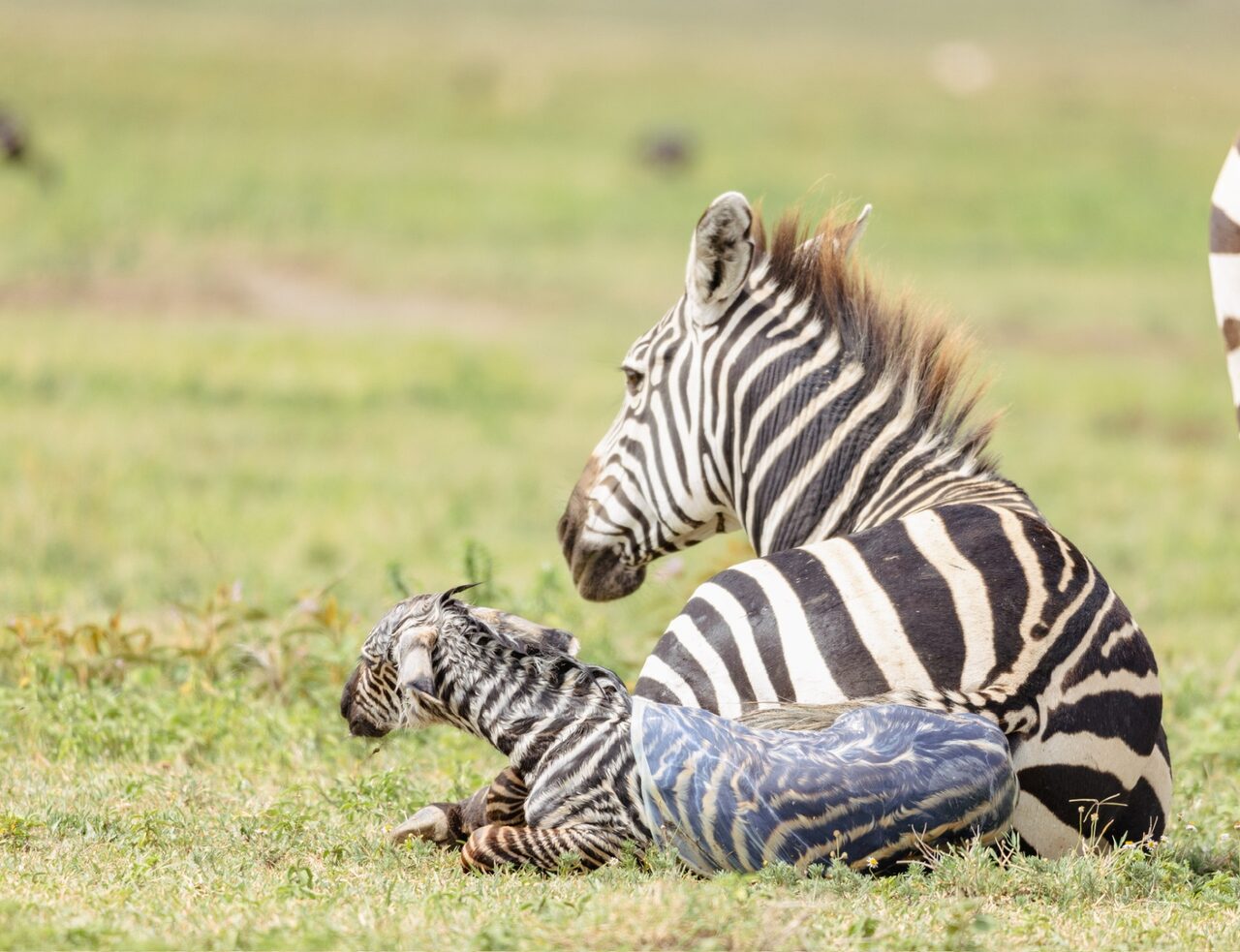
The herds spread across the short-grass plains between Naabi Hill, Ndutu and the Ngorongoro Conservation Area. The volcanic soil here is mineral rich, which is exactly why the wildebeest choose it to give birth.
In February, roughly 8,000 calves are born per day over a two to three week window. Every predator in the ecosystem knows this. Cheetah on the open plains, lion prides on the kopjes, hyena clans working the edges. For pure predator action, February in Ndutu beats August in the north.
Practical note: Ndutu sits inside the Ngorongoro Conservation Area, not the Serengeti National Park, so off-road driving rules are more relaxed here. That matters enormously for photography.
April to June: the rut and the western corridor
The herds move north-west through the central Serengeti in long, snaking columns. In May the rut begins and the plains fill with the noise of half a million males calling at once. It is one of the great overlooked spectacles in Africa.
By late May and June the front runners reach the Grumeti River. Grumeti crossings are smaller and less predictable than the Mara, but the crocodiles here are enormous and the sightings are almost private.
July to October: the Mara River crossings
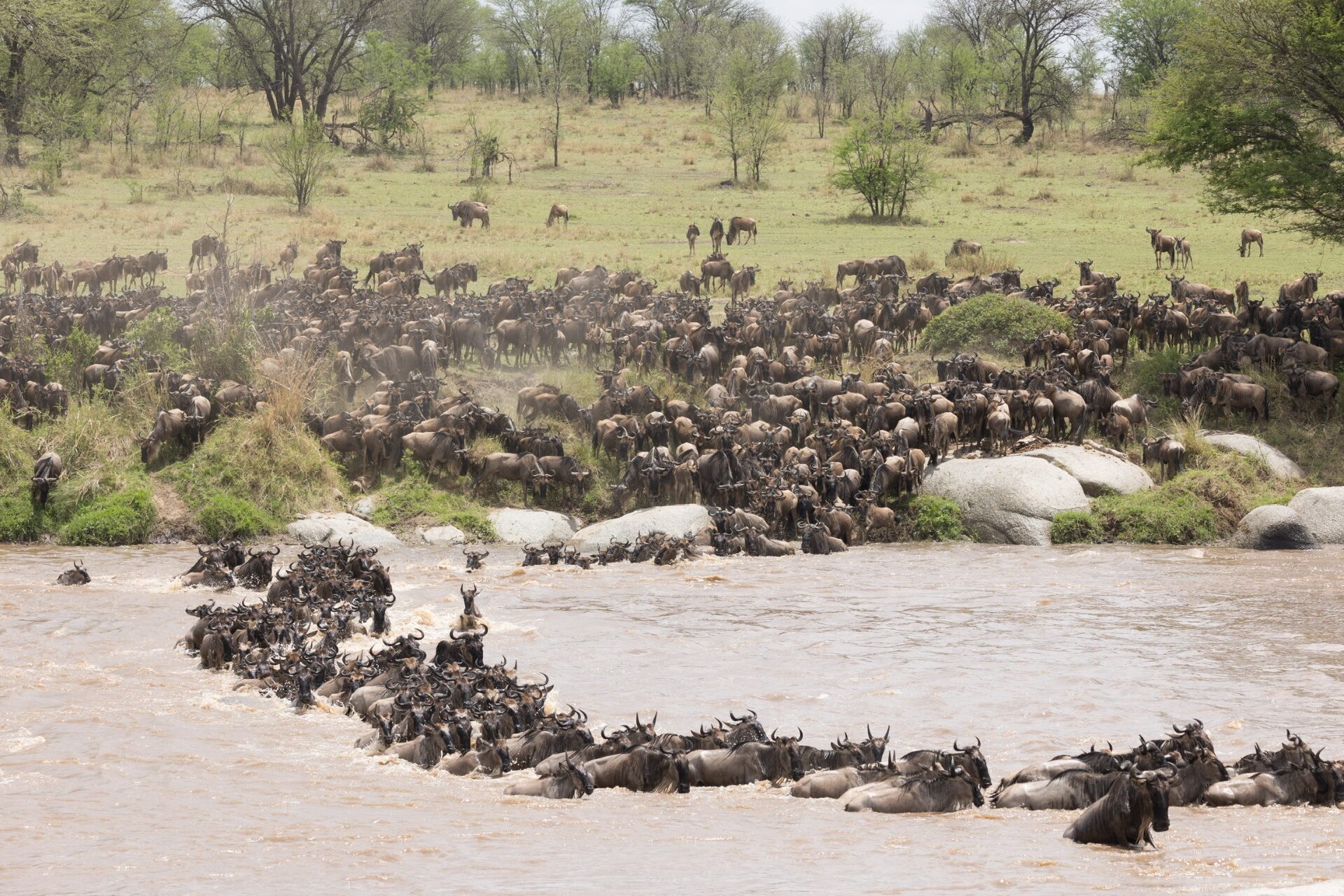
This is what most people mean when they say the migration. From July the leading herds reach the Mara River in the far north of the Serengeti, around Kogatende and Lamai. Crossings continue in waves through August, September and into October, with the herds moving back and forth across the river repeatedly.
Three things guests should know:
- Crossings are unpredictable. A herd can build on the bank for hours and never cross. Three or four nights in the north gives you a strong chance; one night is a lottery ticket.
- Northern Serengeti is a long way from everything. Driving from Arusha takes two long days. Most of our guests fly to Kogatende and drive the rest of the circuit.
- You can stay in Tanzania. The Mara River runs through both the Serengeti and Kenya's Masai Mara. The Tanzanian side has fewer vehicles at the crossing points.
November: the turn south
The short rains green the eastern plains and the herds turn south again, moving through the Loliondo and Lobo areas into the central Serengeti. November is our quiet favourite: good movement, excellent resident game, low season pricing.
How to build an itinerary around the migration
Calving safari, January to March Arusha, Tarangire, Ndutu for three nights, Ngorongoro Crater, Arusha. Six to eight days. See our calving-season itineraries for real prices.
Crossing safari, July to October Arusha, Tarangire, central Serengeti for two nights, fly or drive north to Kogatende for three nights, Ngorongoro Crater. Seven to nine days.
Year-round, migration plus resident game The safest structure for a first trip: Tarangire, Serengeti in the right region for your month, and Ngorongoro Crater. Even if the herds move, the crater and Tarangire deliver.
What the migration is not
It is not a wall of animals you can see from any point in the Serengeti. On any given day the herd front might be spread over 40 kilometres. Being in the right region matters more than the number of days you spend in the park, and that is the single thing a local operator gets right and a foreign reseller usually gets wrong.
“A crossing is not a timetable. I have waited six hours on the Mara bank with the herd standing right there, and then they turned around and walked away. The next morning at seven they crossed in eleven minutes. That is why I ask guests for three nights, not one.”
Ready to turn this into a trip?
FAQ
What month is the best for the Great Migration?+
August and September for Mara River crossings in the northern Serengeti, and February for the calving season and peak predator action in Ndutu. Both are excellent; they are simply different spectacles.
Can you see the migration all year in Tanzania?+
Yes. The herds stay within the greater Serengeti ecosystem year round, moving in a clockwise loop. What changes is which region you need to sleep in.
How many nights do I need to see a river crossing?+
We recommend three to four nights in the northern Serengeti between late July and early October. Crossings are unpredictable and one or two nights significantly reduces your odds.
Is the Tanzanian side better than the Masai Mara?+
For the crossings themselves, the Tanzanian bank generally has fewer vehicles and a longer season, from July through October. The Mara side is easier to reach from Nairobi.