Last updated 13 August 2026 · 12 min read
Tanzania is safe for safari travellers. In practical terms it is one of the calmer countries in East Africa, tourism is a major part of the economy, and the parks are heavily patrolled. The genuine risks on a safari holiday are, in order: road traffic, malaria, the sun, and petty theft in towns. Wild animals come a long way down that list.
That is the honest answer. Below is the detail behind it.
Wildlife: the risk is behaviour, not animals
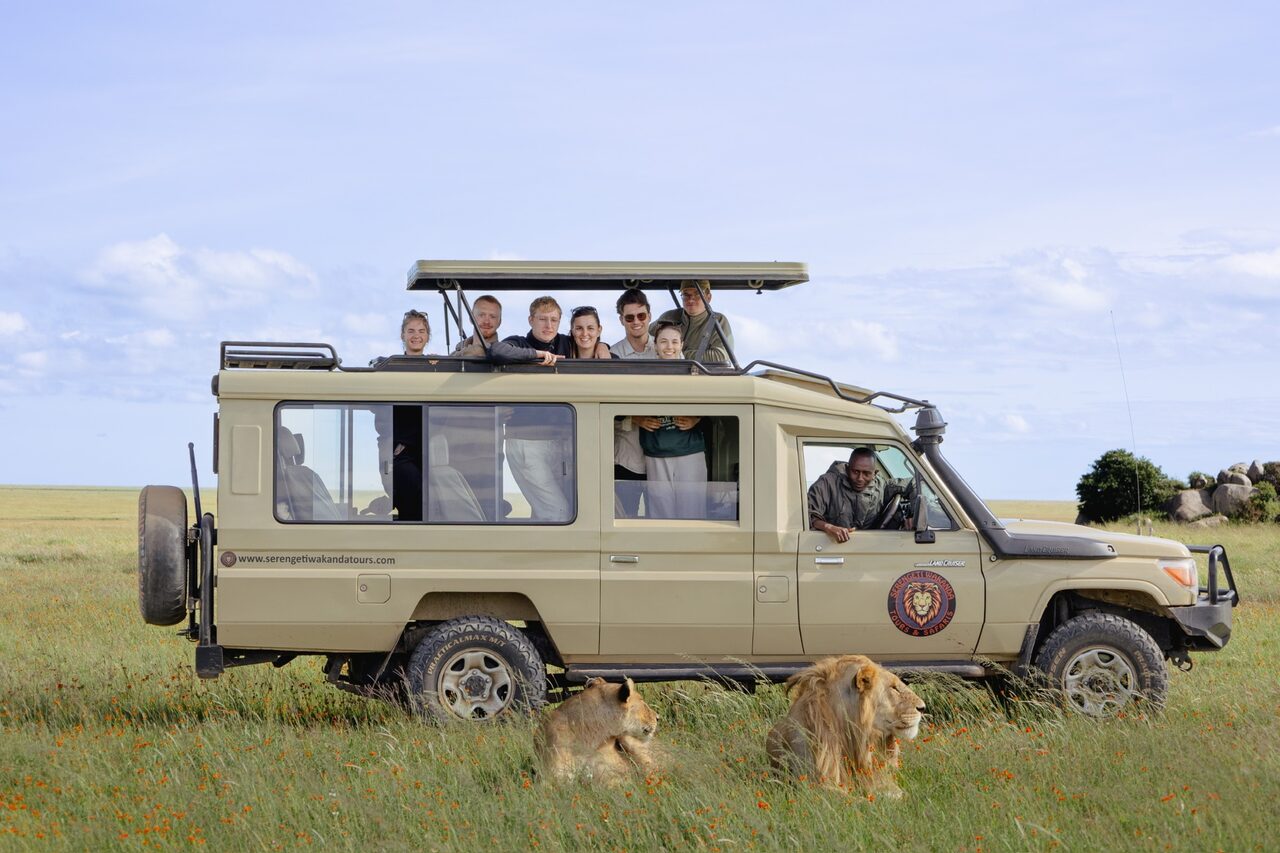
Animals in the Northern Circuit parks have seen vehicles every day of their lives and treat them as neutral objects. Problems start when a person changes the shape of that object.
Our vehicle rules exist for that reason:
- Stay seated when the engine is off and the roof is up, and keep arms and heads inside near predators
- Never stand up or lean out to get closer to a cat
- No getting out of the vehicle except at marked picnic sites and gates
- Do not feed anything, ever, including the baboons at Manyara who will open a bag in seconds
- At camps, walk with an askari escort after dark, and zip the tent fully
Unfenced camps such as those in Seronera and Ndutu genuinely do get elephants and hyenas walking through at night. That is the point of them, and it is safe as long as you stay inside your tent and use the escort.
Roads: the biggest real risk
Road accidents cause more harm to visitors in Tanzania than anything with teeth. What reduces it: a maintained Land Cruiser, a professional guide who does not drive at night between towns, seatbelts on the tarmac sections, and itineraries that do not schedule seven-hour transfers at the end of a long day. Long-distance public buses at night are the thing we tell friends to avoid.
Crime
Serious crime against tourists is rare. Opportunistic theft is not.
- Arusha and Moshi are fine by day. Use a taxi after dark rather than walking with a phone out.
- Stone Town in Zanzibar has occasional bag snatching in the narrow lanes at night; walk the main routes.
- Do not carry your passport around, leave it in the lodge safe with a photo on your phone.
- ATM skimming exists. Use machines inside bank branches during the day.
- Avoid Dar es Salaam beaches after dark and unlit stretches of Zanzibar's east coast.
The wildlife areas themselves have very little crime. There is nowhere to run to.
Health
Malaria is the health item that matters. Prophylaxis is recommended for the whole Northern Circuit and Zanzibar. Most of our guests use Malarone. Combine it with repellent containing DEET or picaridin at dusk, long sleeves in the evening, and the mosquito net your camp provides. The Ngorongoro highlands are high and cool enough that mosquitoes are scarce, but the plan does not change.
Yellow fever vaccination is required only if you are arriving from, or transiting more than 12 hours through, a country with yellow fever transmission. Coming straight from Europe or North America, you do not need it. Kenya transits do sometimes trigger the requirement, so carry your certificate if you have one.
Routine cover to be current on: hepatitis A, typhoid, tetanus. Discuss rabies and hepatitis B with your travel clinic if you are staying long.
Water: drink bottled or filtered only, which we supply in the vehicle throughout. Avoid ice in very small local bars. Lodge food is safe; we lose more guests to over-eating at buffets than to anything else.
Altitude only matters on Kilimanjaro or at the crater rim, which sits around 2,300 metres and simply feels cold and slightly breathless on the first evening.
Medical cover on the ground
Every Serengeti Wakanda safari includes Flying Doctors evacuation cover. If something serious happens in the Serengeti, an aircraft is dispatched to the nearest airstrip and you are flown to Nairobi or Arusha. Arusha has good private hospitals. You should still carry travel insurance that includes medical repatriation, and we ask for the policy number before departure.
Solo travellers and women
Tanzania is a comfortable destination for solo travellers, and we run trips for solo women regularly. Dress modestly in towns and especially in Stone Town, which is predominantly Muslim: shoulders and knees covered. Beach dress is fine at resorts. On safari you are with your guide all day, which removes most of the ambiguity that makes solo travel tiring elsewhere.
Families
Children are welcome and Tanzanians are warm with them. The practical constraints are heat, long transfers and the minimum age some camps set for walking activities. For under-sixes we shorten drives and favour lodges with pools. See our family safari guide for the detail.
LGBTQ+ travellers
Tanzanian law criminalises same-sex relationships, and this is a real legal risk rather than a theoretical one. Same-sex couples travel here and are hosted respectfully at safari camps, but public displays of affection are unwise anywhere in the country, including Zanzibar. We will always give you a straight answer about a specific property if you ask.
Politics and travel advisories
Mainland Tanzania is politically stable and the Northern Circuit is far from the border areas that appear in advisories. Most Western governments advise against travel only to the Mtwara region near the Mozambique border, which is nowhere near any safari route. Check your own government's current advice before you travel; the position for the Northern Circuit and Zanzibar has been unchanged for years.
The short checklist
- Take malaria prophylaxis and use repellent at dusk
- Buy travel insurance with medical evacuation
- Follow the vehicle rules and the camp escort rule
- Do not walk around towns at night with valuables visible
- Drink bottled water and use sunscreen harder than you think you need to
- Leave your passport in the safe
“In eleven seasons the only injury on one of my vehicles was a twisted ankle at a camp bathroom in the dark. Not the lion. Never the lion. Carry a torch and listen to your guide, and you will go home fine.”
Ready to turn this into a trip?
FAQ
Is a Tanzania safari dangerous?+
No. Animals in the Northern Circuit parks are habituated to vehicles and injuries to guests are extremely rare. The genuine risks are road travel, malaria and sun exposure, all of which are managed by a professional operator.
Do I need malaria tablets for Tanzania?+
Yes, prophylaxis is recommended for the Northern Circuit and Zanzibar. Most guests use Malarone. Combine it with repellent at dusk and the net your camp provides.
Do I need a yellow fever certificate?+
Only if you are arriving from, or transiting more than 12 hours through, a country with yellow fever transmission. Travelling directly from Europe or North America, you do not.
Is Zanzibar safe?+
Yes, with normal precautions. Stone Town has occasional bag snatching in the lanes at night, so stick to the main routes and use a taxi late. Dress modestly away from the beach; Zanzibar is predominantly Muslim.
Is Tanzania safe for solo female travellers?+
Yes, and we run these trips regularly. On safari you are with your guide throughout. In towns, dress modestly, use taxis after dark, and keep valuables out of sight.
What happens if there is a medical emergency in the Serengeti?+
Every trip includes Flying Doctors evacuation cover. An aircraft is dispatched to the nearest airstrip and you are flown to a hospital in Arusha or Nairobi. Carry travel insurance with medical repatriation as well.
Are the camps fenced?+
Most bush camps are not, and animals do walk through at night. It is safe as long as you stay in your tent after dark and use the askari escort between tent and dining area.
Is it safe to drink the water?+
Drink bottled or filtered water only. We supply it in the vehicle throughout the safari. Lodge food is safe to eat, including salads at reputable properties.